Richmond's Professional Black and White Portraitist: Toni
(continued from the Home page)I thought, how many new lives can one have? Then I thought . . . as many as we like. While we can.
—Dame Judi Dench as Evelyn in The Second Best Exotic Marigold Hotel
If you've lived more than one life, you might relate.
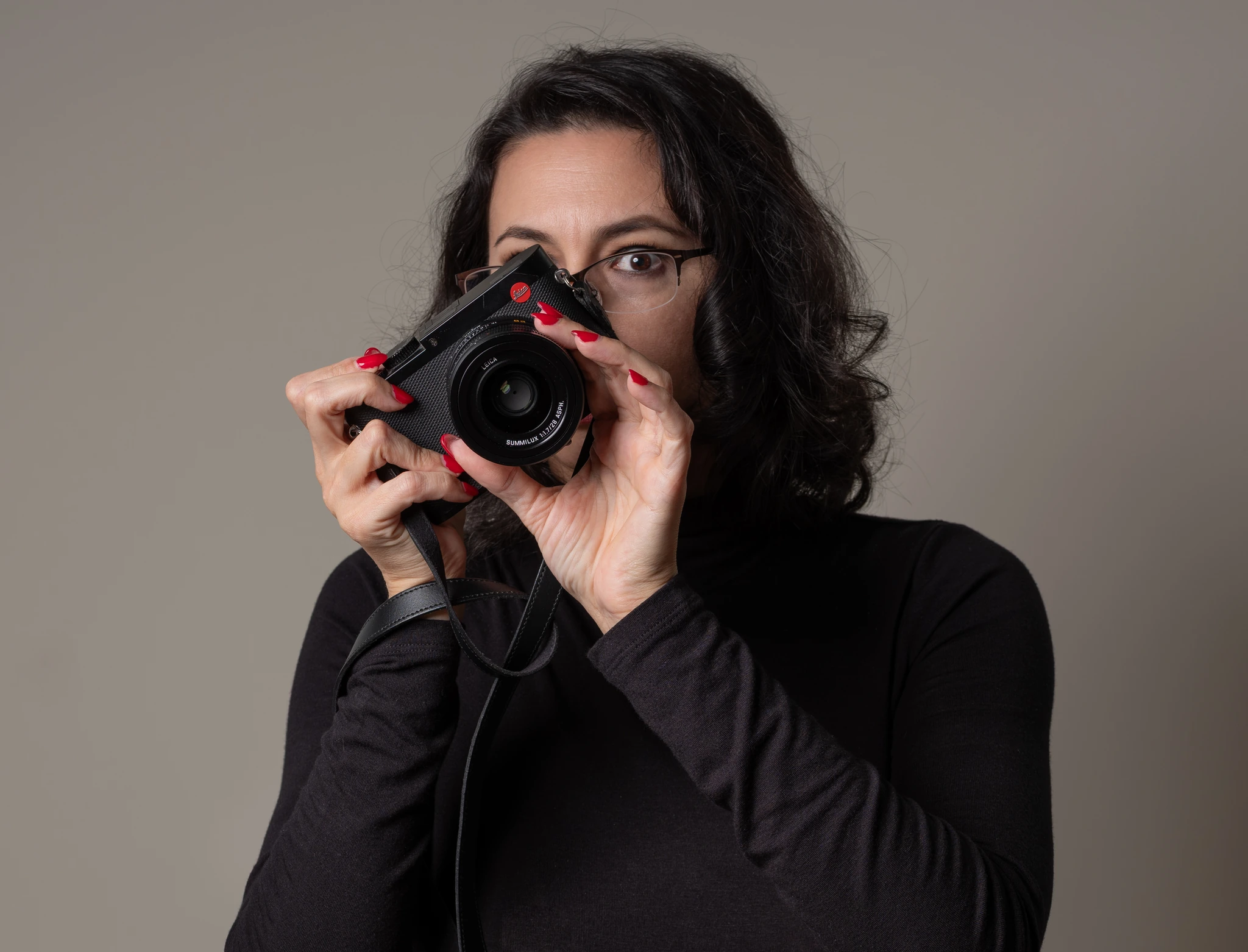
Photography is a passion, which most photographers say.
But I say this after two decades in another career, post-burnout.
We also have a reputation for wishing to be behind the camera so as to avoid having our picture taken.
In these two ways, I’m no different than any other photographer. In every other way, my path has been long and winding and not typical at all.
I had to figure out what I wanted to be when I grew up. That took a while.
Education
I had always wanted to be an artist but can’t draw or paint (you'll see this when I storyboard for you). Photography allows me to be an artist, and because of that, I fell in love. When I entered college to pursue a degree in photography, I was excited about a career as a professional photographer.
Four years of intense learning and critique later, I hated photography and all thought of it.
I was trained for commercial photography and during my internships with commercial photographers, I realized it was a desk job with a camera. I didn’t want a desk job, but I wasn’t interested in journalism (consumer/family photography wasn’t even on my radar).
So I wandered away.
Joke's on me
Photography is even more of a desk job than it was 30 years ago; but without the stress of college, and having lived other lives, I feel free to do as I please in shaping this business. This isn't arrogance, but acceptance that my approach is different.
While I kept up my Photoshop skills over the years, switching entirely to digital has been more difficult than expected. It’s far more complicated than film, with far too many variables. Though it's been technically-frustrating, I've been able to apply my film training to digital, mostly because I've been able to work with fantastic digital cameras.
What Changed?
In 2015, I wanted to upgrade from the Canon Digital Elph, my first-ever digital camera, bought in 2009. Researching my specific requirements led me to the newly-released Leica Q. I received it as a gift and it changed the course of my life.
It reignited my love for photography, with a determination and depth lacking in my teen years. I still shoot with it and its Zeiss lens creates the most beautiful images. As soon as I can, I'm investing in Leica’s medium-format range, the S system!
My Q invites spontaneity, a camera made for street photography. It begs to be used, and used well.
My burning question was how?
The Answer: Listening with a camera.
Ultimately, that’s what VIP RVA really is.
I've lived in a few countries, have traveled through many, and stayed for a while in many. Combining photography with meeting people is the best of both worlds, and I don’t have to spend a moment in Economy Class.
Photographically-documenting an interesting conversation is probably my best idea yet, the core concepts formed in 2018.
During my younger years I sometimes wanted to photograph the people I talked to. But I felt it would be intrusive or treating them as a tourist exhibit. When I photographed locations, I liked to keep people out of the photos (people ruin pictures!).
You want an evocative and authentic photo of yourself, right?
Something impossible to accomplish via selfie sticks or the bathroom mirror, or with standardized posing.
I couldn’t be happier to discover how to make photography work for me and you.
This deeply personal approach transforms the results we see. These photos will be you at your realest, a respectful and honest revelation of you.
Take the first step to your new portraits.